NDA Eligibility Criteria 2026: Age Limit, Qualification & Attempts
What the NDA Examination Is and Its Academic Role
Purpose of the National Defence Academy
The National Defence Academy is a premier educational institution for future military leaders. It provides a tri-service environment where candidates from all branches train together. This structure promotes leadership and unity within the Indian Armed Forces.
The academy serves as a central gateway to commissioned service. It prepares individuals for the Indian Army, Navy, and Air Force on a single campus. This integrated system develops a shared professional understanding among officers.
Selection includes a competitive written examination followed by an intelligence and personality interview. The process identifies candidates suited for discipline, responsibility, and professional development. It combines academic study with military training standards.
Training pathway after selection
Selected candidates begin a three-year training program at Khadakwasla. Training emphasizes physical fitness, leadership, and academic instruction. It prepares cadets for the mental and physical demands of military service.
After the academy, cadets proceed to service-specific training institutions. This phase provides technical and professional specialization for each branch. It leads to a permanent commission in the armed forces.
Male and female candidates now have equal opportunity in this training pathway. The inclusion of female cadets reflects expanded access to national service. The academy continues to function as a modern military education institution.
Age Limit Criteria Explained
Required birth date range
Age eligibility determines when a student may begin the selection process. The Union Public Service Commission specifies strict birth date ranges for each cycle. These ranges ensure candidates are at an appropriate developmental stage.
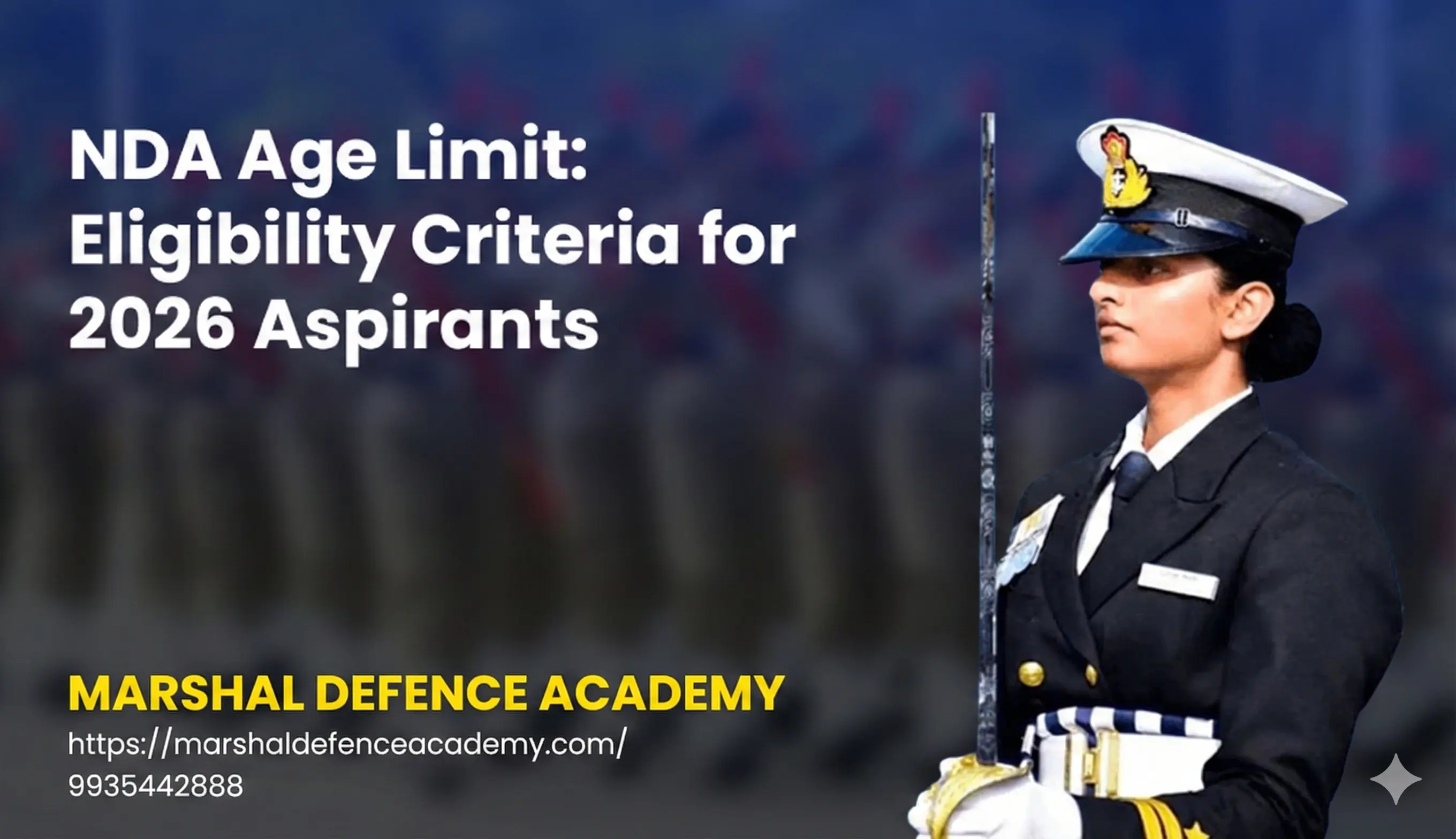
For NDA I 2026, candidates must be born between 2 July 2007 and 1 July 2010. For NDA II 2026, candidates must be born between 2 January 2008 and 1 July 2011. Both start and end dates are included.
Applicants should verify their birth date against the official notification before applying. Even a minor mismatch can result in disqualification at later stages. Accuracy is essential to meet service requirements.
Why age eligibility matters in military training
Military education targets candidates aged 16.5 to 19.5 years. This stage supports development of physical endurance and discipline. It ensures cadets can handle intensive field training.
No age relaxation is provided for any category. Uniform standards maintain consistency across the training cohort. Physical and mental expectations remain the same for all applicants.
Early selection supports a full service career progression. Officers gain time for training, experience, and leadership roles. Adherence to age limits supports operational readiness.
Educational Qualification Requirements
Army Wing qualification
Academic requirements differ by service branch. All applicants must have passed or be appearing for Class 12. This allows students to apply while completing school.
The Army wing accepts candidates from Science, Commerce, or Arts streams. This policy recognizes leadership potential across educational backgrounds. It enables broader participation in land forces service.
Although any stream is permitted, strong general knowledge is helpful. The examination tests multiple academic areas aligned with school education. The policy supports a diverse officer cadre.
Air Force and Naval Wing requirements
Entry to the Air Force and Naval wings requires a specialized academic background. Candidates must have studied Physics and Mathematics as core subjects. This prepares them for technical training.
These subjects support understanding of flight systems and naval operations. The Naval Academy 10+2 Cadet Entry Scheme follows the same rule. Students must choose subjects accordingly in school.
Proficiency in these subjects also assists performance in the written examination. The test includes a dedicated Mathematics section. Mastery of fundamentals is essential for technical wings.
Science subjects and academic readiness
Academic readiness depends on familiarity with the 10+2 syllabus. There is no minimum board examination percentage requirement. However, competition makes strong academic performance advantageous.
Mathematics and General Ability preparation is essential for the written test. These areas form the basis of the UPSC assessment. Early focus helps balance school exams and preparation.
Understanding syllabus expectations allows a smoother transition to academy training. School learning should be used to build foundational knowledge. Academic discipline supports early selection success.
Number of Attempts and Application Eligibility
Attempts policy interpretation
The concept of attempts is often misunderstood. There is no fixed limit on total applications. Eligibility depends only on the defined age window.
Candidates may apply as many times as their age permits. Typically, this allows 4–5 opportunities. These occur across two annual examination cycles.
Each cycle provides a new opportunity to qualify. Students should understand how many attempts in NDA based on their birth date. Multiple attempts allow performance improvement over time.
Reapplying while studying in Class 12
Class 12 students are eligible to apply. They are admitted provisionally pending board results. This enables participation before completing school.
Selected candidates must submit proof of passing before the course begins. This prevents a gap between school and training. It is the most common entry pathway.
Students in Class 11 are not eligible. They should use this period to build academic and physical preparation. Early preparation supports a stronger first attempt.
Medical, Physical, and Gender Eligibility Overview
Physical standards overview
Medical and physical standards ensure suitability for demanding roles. They also protect long-term health and safety. The requirements reflect military service conditions.
Height requirements vary by service and gender. For the Army and Navy, minimum height is 157 cm for males and 152 cm for females.
The Air Force requires a minimum height of 163 cm. Weight must be proportionate to height and age. These criteria ensure physical readiness for duty.
Fitness preparation expectations
Medical fitness is assessed after the SSB interview. Examiners check for conditions that may limit training capability. Regular physical activity supports compliance with standards.
All candidates must be unmarried at the time of application and during training. This condition remains throughout academy training. It supports full engagement with training requirements.
Regular exercise and healthy habits improve readiness. Posture and flexibility are also evaluated. Physical fitness should be maintained consistently, not only for testing.
How Students Typically Prepare Academically
Study subjects and learning roadmap
Preparation requires balance between academics and physical conditioning. The study plan follows the 10+2 curriculum. Mastery of school subjects forms the foundation.
The written examination includes objective papers in Mathematics and the General Ability Test. Mathematics assesses analytical ability and syllabus knowledge. It evaluates logic and problem-solving skills.
The General Ability Test measures English proficiency and general knowledge. Topics include History, Geography, Science, and current events. Daily reading and revision support preparation.
Balancing school academics with NDA preparation
Practicing previous year question papers is standard preparation. It improves familiarity with format, speed, and accuracy. Many students seek the Best NDA coaching in Lucknow for structured guidance.
Students can manage both board exams and entrance preparation due to syllabus overlap. School concepts form the core of the examination. Strong basics support both assessments.
A personal study plan helps organize time effectively. Physical training should be scheduled daily. This approach supports readiness for the interview stage.
Important Official Guidance and Where to Verify Information
Reading official notification carefully
Official sources are the most reliable for eligibility and application rules. Students should avoid outdated third-party advice. Verification prevents missed deadlines.
The Union Public Service Commission releases a detailed notification for each cycle. It confirms age limits, vacancies, and examination centers. Careful reading prevents application errors.
Applications must be submitted online before the deadline. The process includes registration and fee payment. Certain categories, including female candidates, are exempt from the examination fee.
Avoiding misinformation
Candidates should maintain an active email and mobile number. A printed application copy should also be kept. Organized documentation reflects professional conduct.
Incorrect eligibility information can cause unnecessary concern. Only official commission websites should be used for updates. They provide accurate policy and schedule information.
External advice should always be cross-checked with official notifications. Careful verification supports responsible preparation. Accurate information improves application success.
Key Learning Takeaways
- Age Window: Eligibility is strictly 16.5 to 19.5 years with no category relaxations.
- Academic Path: Army entry requires any 12th pass; Navy/Air Force require Physics and Math.
- Provisional Entry: Students in Class 12 can apply before their final board results.
- Gender Equality: Male and female candidates face identical academic and training standards.
- Verification: Always use the official UPSC portal to confirm dates and requirements.